
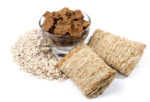
If you are an athlete who has opted out of TikTok and Instagram, you might have missed the #Fibermaxxing buzz. The goal of #FiberMaxxing is to eat lots of fiber-rich foods. Given most Americans tend to consume too little fiber, a nudge to #Fibermax seems a reasonable idea. High fiber diets are associated with a lower risk of heart disease, certain cancers, and intestinal issues. That said, athletes might want to think twice before #FiberMaxxing. The concern is fecal urgency (diarrhea)—an inconvenience if you are in the midst of a track workout, long row, or soccer game. While some fiber is good, more is not necessarily better.
Here’s what you want to know about fiber, including how to enjoy reasonable amounts from common foods.
Where to find fiber
Fiber is found in plant foods: grains, beans, legumes, nuts, seeds, fruits, vegetables. Fiber is not in meat, fish, eggs, dairy, or any animal foods. If you eat a high protein diet that limits your intake of “carbs” (plants) such as oatmeal, brown rice, or whole grains, you could easily consume a diet that’s low in fiber. Even with a daily big salad, you may miss the fiber goal of 28 to 35 grams a day. A whole head of lettuce (16-oounces) offers only 5 grams of fiber. You’ll need to add quinoa, beans, and nuts, to hit the fiber goal.
Benefits of a high fiber diet
The most obvious benefit of consuming a fiber-rich diet is regular bowel movements. (That said, some athletes eat a fiber-poor yet still poop regularly because exercise stimulates bowel movements.) The less obvious benefits of choosing a fiber-rich diet include
1) better blood sugar control. Fiber slows the entry of glucose into the blood stream.
2) better appetite control. Fiber takes longer to digest; you feel full longer.
3) better heart health. Fiber helps lower cholesterol levels.
4) better diversity of gut microbes. A diverse microbiome means a healthier gut and immune system. Gut microbes digest fiber into short-chain fatty acids that help regulate inflammation and immune function.
Kinds of Fiber
Different foods offer different types of fiber with different health benefits.
- Insoluble fiber gives plants their structure. It is present in wheat bran, vegetables and whole grains, among other foods. It doesn’t dissolve in water. Insoluble fiber absorbs water, increases fecal bulk, and makes the bowels easier to pass. It’s also an important food for the billions of bacteria that make up your microbiome.
- Soluble fiber dissolves in water. It forms a viscous gel (think oatmeal, barley, the liquid in a can of beans). Soluble fiber helps lower cholesterol and is associated with a reduced risk of heart disease. Soluble fiber helps stabilize blood glucose levels, making oatmeal a helpful pre-exercise meal or snack.
Foods with fiber
Fiber is lost through food processing, such as milling whole wheat into white flour, peeling skin from fruits (apples, pears) and vegetables (potatoes, cucumbers). You’ll get more fiber by choosing unrefined foods. If you want to add more fiber to your diet, gradually increase your fiber intake so your gut has time to acclimate. As little as 5 to 10 grams of fiber can change bowel behavior, so if you #FiberMax and add 20 grams in a day, watch out! Your best bet, as an athlete, is to learn the dose of fiber-rich foods that minimizes (not maximizes) your time on the toilet.
How much is enough?
The recommended daily intake is 28 grams per 2,000 calories—at least 28 to 35 grams fiber per day or about 10 grams per meal. Look for fiber information on food labels; you’ll find it under “Carbohydrate.” This list of fiber-rich foods can help you identify some foods rich in fiber.
BRAN CEREALS are the easiest way to boost fiber intake:
Fiber-One, 2/3 cup 18 grams fiber/~100 calories
All -Bran, 2/3 cup 12 ”
Bran flakes, 1 cup 7 ”
Oatmeal, 1 pkt instant 3 ”
BREADS and crackers made from whole grain flours (whole
wheat, rye, oats, corn) are fiber-rich as are bran breads, muffins
Wasa crackers, 3 slices 9 grams fiber/ ~100-120 calories
Triscuits, 6 3 ”
Dave’s 21 grain, 1 slice 4 ”
Whole wheat, 1 slice 3 ”
White bread, 1 sl 0.5 ”
FRESH FRUITS with edible skins are highest in fiber.
Pear, medium 4 grams fiber per serving
Apple, medium 4 ”
Orange, medium 3 ”
Banana, medium 3 ”
BERRIES with seeds are a good low-cal fiber source.
Raspberries (1.75 cup) 14 grams per 100 calories
Blackberries (1 cup) 10 ”
Strawberries (2 cups) 8 ”
Blueberries (1.2 cup) 5 ”
DRIED FRUITS are another good source.
Figs, 2 4 grams per 100 calories
Dates, 4 3 ”
Prunes, 5 3 ”
Raisins, 1/4 cup 1 ”
BEANS and LEGUMES offer both fiber and protein.
Refried beans, 1/2 c 7 grams per serving
Hummus, 1/2 c 6 ”
Kidney beans, 1/2 c 6 ”
Baked beans, 1/2 c 6 ”
NUTS and SEEDS are good for fiber-rich snacks.
Sunflower seeds, 1 oz, 3 grams per 160 calories
Peanut butter, 2 Tbsp 2 grams per 200 calories
Almonds, 24 3 grams per 165 calories
Sesame seeds, 1 T 1 gram per 50 calories
LOW FIBER FOODS: meat, fish, chicken, eggs, milk, cheese as well as sugar, sweets, butter, and oil.
Nancy Clark MS RD counsels virtually both fitness exercisers and competitive athletes (617-962-4382). Her best-selling Sports Nutrition Guidebook is a popular resource. For more information, visit NancyClarkRD.com